Below is the official media advisory from NASA. There is a lot of speculation regarding what this actually means. Guesses range from a discovery of bacterial life on Titan to some previously unknown parameter for life that can now be tested from Earth. The statement, "to discuss an astrobiology finding that will impact the search for evidence of extraterrestrial life," is what is driving all of this but to -FUPPETS- it does seem like they may have discovered a new method to detect life-supporting, Earth-like planets.
MEDIA ADVISORY : M10-167 NASA Sets News Conference on Astrobiology Discovery; Science Journal Has Embargoed Details Until 2 p.m. EST On Dec. 2 WASHINGTON -- NASA will hold a news conference at 2 p.m. EST on Thursday, Dec. 2, to discuss an astrobiology finding that will impact the search for evidence of extraterrestrial life. Astrobiology is the study of the origin, evolution, distribution and future of life in the universe.
The news conference will be held at the NASA Headquarters auditorium at 300 E St. SW, in Washington. It will be broadcast live on NASA Television and streamed on the agency's website at http://www.nasa.gov/.
Participants are:
- Mary Voytek, director, Astrobiology Program, NASA Headquarters, Washington
- Felisa Wolfe-Simon, NASA astrobiology research fellow, U.S. Geological Survey, Menlo Park, Calif.
- Pamela Conrad, astrobiologist, NASA's Goddard Space Flight Center, Greenbelt, Md.
- Steven Benner, distinguished fellow, Foundation for Applied Molecular Evolution, Gainesville, Fla.
- James Elser, professor, Arizona State University, Tempe
Media representatives may attend the conference or ask questions by phone or from participating NASA locations. To obtain dial-in information, journalists must send their name, affiliation and telephone number to Steve Cole at stephen.e.cole@nasa.gov or call 202-358-0918 by noon Dec. 2.
For NASA TV streaming video and downlink information, visit:
http://www.nasa.gov/ntv

Showing posts with label NASA. Show all posts
Showing posts with label NASA. Show all posts
Dec 2, 2010

May 26, 2010
-FUPPETS- Will Miss the Space Shuttle Fleet
-FUPPETS- was there, looking out over the tops of the grammar school, as the Space Shuttle Columbia became the first shuttle to blast off from Cape Canaveral. From Puerto Rico, the shuttle could be seen arcing high into the sky and into outer space. It was a magnificent sight, never to be forgotten.
-FUPPETS- remembers siting in the middle school lunch room when a friend came by, flustered and anxious, to tell of that morning's Space Shuttle Challenger disaster. It was a reminder of just how insanely risky any and all jaunts into outer space are.
-FUPPETS- was in Austin when the Space Shuttle Atlantis passed by around 10:15 PM one night, on it's way to it's scheduled landing in Florida. The bright white plume behind the glinting shuttle reflected the sunlight which was no longer hitting that side of the Earth. The shuttle crossed the whole arc of the visible sky in less than a minute, for it was going around ten thousand miles per hour. Rushing inside to find that, less than a minute after seeing it over Texas, the shuttle had reached Florida and was touching down, really stressed how very fast that ship was rocketing through the atmosphere.
-FUPPETS- has never had, and will never have, the luxury of seeing a Space Shuttle launch in person, for the last mission has just ended. Sadness for the science nerds. The Space Shuttle fleet has been retired, and all await the new replacement fleet, which will not be ready for years, forcing the USA and NASA to rely on the Russian space program to get anything up to the International Space Station. This sucks major.
Mr. Jay Penfield has been good enough to share a link to an amazing 4 minute time-lapse movie, compiled from hundreds of hours of footage taken of the preparation and launch of one of the Space Shuttles. It is an amazing thing to see just how much work goes into every tiny aspect of space travel.
Enjoy. Click HERE for the time-lapse movie.
-FUPPETS- remembers siting in the middle school lunch room when a friend came by, flustered and anxious, to tell of that morning's Space Shuttle Challenger disaster. It was a reminder of just how insanely risky any and all jaunts into outer space are.
-FUPPETS- was in Austin when the Space Shuttle Atlantis passed by around 10:15 PM one night, on it's way to it's scheduled landing in Florida. The bright white plume behind the glinting shuttle reflected the sunlight which was no longer hitting that side of the Earth. The shuttle crossed the whole arc of the visible sky in less than a minute, for it was going around ten thousand miles per hour. Rushing inside to find that, less than a minute after seeing it over Texas, the shuttle had reached Florida and was touching down, really stressed how very fast that ship was rocketing through the atmosphere.
-FUPPETS- has never had, and will never have, the luxury of seeing a Space Shuttle launch in person, for the last mission has just ended. Sadness for the science nerds. The Space Shuttle fleet has been retired, and all await the new replacement fleet, which will not be ready for years, forcing the USA and NASA to rely on the Russian space program to get anything up to the International Space Station. This sucks major.
Mr. Jay Penfield has been good enough to share a link to an amazing 4 minute time-lapse movie, compiled from hundreds of hours of footage taken of the preparation and launch of one of the Space Shuttles. It is an amazing thing to see just how much work goes into every tiny aspect of space travel.
Enjoy. Click HERE for the time-lapse movie.
Mar 31, 2010
What Do 10 Million Stars Look Like?
-FUPPETS- has the answer. From the good people at NASA's Astronomy Picture of The Day, here is a very crisp telescopic image of the globular star cluster Omega Centauri (named NGC 5139). Click the image below to enlarge.
Globular star clusters are large groups of stars that orbit around the edges of galaxies. This particular one orbits around our Milky Way galaxy, along with hundreds of others. Omega Centauri is the brightest and most densely packed of all the known star clusters. One strange thing about this star cluster is that it is far older than the other star clusters, with an approximate age of 12 billion years. It is also so densely packed in it's center that the stars there are less than .1 light year apart. That is ridiculously close by outer space standards. Just for comparison, the closest detected star to our Sun is Proxima Centauri, a red dwarf star approximately 4.2 light years away. If you happened to live on a world orbiting a star near Omega Centauri's center, it is likely you would never experience night, or what Earthlings consider night. The vast amount of nearby stars would ensure that even at "nighttime" the sky would never go dark. It is possible that even individual stars would not be discernible, just a flat field of light in the sky at all times. -FUPPETS- wonders what kind of mythology a species would develop without nighttime stars and celestial objects to ponder?

Globular star clusters are large groups of stars that orbit around the edges of galaxies. This particular one orbits around our Milky Way galaxy, along with hundreds of others. Omega Centauri is the brightest and most densely packed of all the known star clusters. One strange thing about this star cluster is that it is far older than the other star clusters, with an approximate age of 12 billion years. It is also so densely packed in it's center that the stars there are less than .1 light year apart. That is ridiculously close by outer space standards. Just for comparison, the closest detected star to our Sun is Proxima Centauri, a red dwarf star approximately 4.2 light years away. If you happened to live on a world orbiting a star near Omega Centauri's center, it is likely you would never experience night, or what Earthlings consider night. The vast amount of nearby stars would ensure that even at "nighttime" the sky would never go dark. It is possible that even individual stars would not be discernible, just a flat field of light in the sky at all times. -FUPPETS- wonders what kind of mythology a species would develop without nighttime stars and celestial objects to ponder?
The image below is a tight close-up of the core of Omega Centauri. Click image for a larger version.

Most scientists think that Omega Centauri exists as the end result of an old galaxy colliding with the Milky Way, and scientists reported in 2008 that they have apparently detected a mid-sized black hole at it's center, which would also point to a galactic collision in the distant past as the cause of it's creation. It is hard to imagine that something so massive, with over ten million stars in it, is just a dwarf companion to our own galaxy. The Milky Way is also just a medium sized galaxy. There are galaxies out there with ten times the number of stars that our galaxy has. It is just a mind-boggling number and quite a humbling thing to ponder.
Dec 3, 2009
-FUPPETS- & Holidays Do Not Mix
Oh man do the holidays throw a monkey wrench into the -FUPPETS- gears. The same thing happens every year. Insanity ensues, and there just seems to not be enough time to do everything that needs to be done.
How does Tiger Woods do it?
Ha Ha.
So much is happening. Scientists of all types keep coming up with amazing discoveries. A near-legendary bar, a hang-out for many astronauts, is closing. The Outpost Tavern has been frequented by many of the NASA community for over three decades.
Before that it was an Air Force barracks. The walls are lined with memorabilia from the space program.
So long, Outpost Tavern.
How does Tiger Woods do it?

Ha Ha.
So much is happening. Scientists of all types keep coming up with amazing discoveries. A near-legendary bar, a hang-out for many astronauts, is closing. The Outpost Tavern has been frequented by many of the NASA community for over three decades.

Before that it was an Air Force barracks. The walls are lined with memorabilia from the space program.

So long, Outpost Tavern.
Nov 12, 2009
NASA Unveils Plan to Free the Mars Rover SPIRIT!
It has been months in the making, and countless theories and possibilities brainstormed, but NASA has announced that it has a plan in place to begin what will hopefully accomplish the extraction of the Mars Rover SPIRIT from the "quicksand" trap it has been embedded in.
The "soil" is so fine it more closely resembles talcum powder than what we could call sand or dirt.
Click HERE to see a full circle panorama of Spirit's current location.
Click HERE to see a large image detailing the path of the Mars Rover SPIRIT since arriving at the plateau designated "Home Plate." The yellow line marks the path taken, and you can see the location of SPIRIT's current predicament, labelled "Troy."
They will begin to run the extraction program on Monday. Scientists expect it to be a painstakingly slow process, but little by little, they hope to once again have SPIRIT roaming free on Mars. Even if the worst occurs, and they are not able to extract SPIRIT from it's sandy trap, the area where it is located is highly rich in geological oddities, and much good science could still be done. -FUPPETS- hopes it does not come to that!

The "soil" is so fine it more closely resembles talcum powder than what we could call sand or dirt.
Click HERE to see a full circle panorama of Spirit's current location.
Click HERE to see a large image detailing the path of the Mars Rover SPIRIT since arriving at the plateau designated "Home Plate." The yellow line marks the path taken, and you can see the location of SPIRIT's current predicament, labelled "Troy."
They will begin to run the extraction program on Monday. Scientists expect it to be a painstakingly slow process, but little by little, they hope to once again have SPIRIT roaming free on Mars. Even if the worst occurs, and they are not able to extract SPIRIT from it's sandy trap, the area where it is located is highly rich in geological oddities, and much good science could still be done. -FUPPETS- hopes it does not come to that!
Nov 4, 2009
Enceladus, and it's water geysers, rocks -FUPPETS-
NASA's Cassini Spacecraft has been in orbit around Saturn for 5 years now. It has provided humanity with some of the most strikingly beautiful images of everyone's favorite denizen of the Solar System, Saturn, as well as it's myriad moons. Constant streams of raw data are sent from Cassini to Earth for scientist's and fanatics such as -FUPPETS- to drool over.
On November 2nd, Cassini made it's closest approach to one of the most intriguing bodies in our Solar System, Saturn's moon Enceladus. The reason Enceladus is so amazing is that it is the one place in our Solar System where liquid water has been conclusively found. The greatest part is how it was found. Enceladus has massive geysers of water erupting from it's icy surface! Cassini discovered these plumes, and has now actually gotten close enough to pass though the outer reaches of one of these immense geysers, just over 100 miles away from the surface of the moon itself.
Cassini shot by Enceladus at 7.7 kilometers per second, or 17,200 miles per hour.
In this raw image, one can see one of the massive plumes, back-lit by the sun, as Cassini approaches Enceladus. (click the image to enlarge to full resolution)
Scientists have previously detected water vapor, sodium, and organic molecules in the jets, but this flyby will actually allow the Cassini spacecraft to take up-close readings of the chemical composition of these jets.
Pictured below is another shot of Enceladus, displaying what appear to be multiple geyser jets. (click on image to enlarge)
In 16 days there will be another fly-by of Enceladus by Cassini. -FUPPETS- cannot wait to see what bad-assitude Cassini will spring upon us next!
On November 2nd, Cassini made it's closest approach to one of the most intriguing bodies in our Solar System, Saturn's moon Enceladus. The reason Enceladus is so amazing is that it is the one place in our Solar System where liquid water has been conclusively found. The greatest part is how it was found. Enceladus has massive geysers of water erupting from it's icy surface! Cassini discovered these plumes, and has now actually gotten close enough to pass though the outer reaches of one of these immense geysers, just over 100 miles away from the surface of the moon itself.
Cassini had approached Enceladus more closely before, but this passage took the spacecraft on its deepest plunge yet through the heart of the plume shooting out from the south polar region. Scientists are eagerly sifting through the results. - ( Space.com )
Cassini shot by Enceladus at 7.7 kilometers per second, or 17,200 miles per hour.
In this raw image, one can see one of the massive plumes, back-lit by the sun, as Cassini approaches Enceladus. (click the image to enlarge to full resolution)

Scientists have previously detected water vapor, sodium, and organic molecules in the jets, but this flyby will actually allow the Cassini spacecraft to take up-close readings of the chemical composition of these jets.
Pictured below is another shot of Enceladus, displaying what appear to be multiple geyser jets. (click on image to enlarge)

In 16 days there will be another fly-by of Enceladus by Cassini. -FUPPETS- cannot wait to see what bad-assitude Cassini will spring upon us next!
Nov 2, 2009
MARS ROVER UPDATE
-FUPPETS- loves the Mars Rovers.
The Mars Rover named Spirit, stuck in deep Martian sands since April, is going through what scientists deem Amnesia events. The Flash memory that stores observational data for the Rover before it goes into it's nightly "hibernation" cycle is suffering from something, maybe power outages, that are not allowing the Rover to store data overnight during it's "sleep."
There are other data storage options on Spirit but they require the Rover to send all it's data to Earth before it goes into it's sleep cycle. Something similar occurred a few months ago.
NASA scientists have been using a Rover double to practice different techniques to extricate Spirit from it's sandy trap. It is a painstaking effort and hopefully it will pay off soon. The current problems with the memory have made this a tricky proposition.
Spirit and it's twin Opportunity have been roaming around on Mars since 2004. Originally slated to have a 90- day "life," these rovers are so very well constructed and engineered that they have managed to survive 6 Martian winters! -FUPPETS- loves that!
HERE is a great F.A.Q. for information on the two Rovers where Mars rover engineer Ashley Stroupe answers people's questions.
NASA also has a website entitled FREE SPIRIT, which is seeking any ideas to help extricate this Rover.
This is an image from earlier in October of the sand that Spirit is stuck in.

Oct 13, 2009
Thoughts On Recent Events
Just a few days ago a mission to the Moon was completed. This mission sent a vehicle to crash into one of the southern craters on the Moon. Specifically, the LCROSS (Lunar Crater Observation and Sensing Satellite) spacecraft sent it's spent rocket and then itself, on a collision course to the Lunar surface, with hopes of kicking up first the Lunar topsoil and then the Lunar bedrock. This ejecta would then be measured by spectrometers to determine if there really is some underground water ice on the Moon.
Many people decried this as being a waste of money, as is usual when people do not understand science or scientific endeavors. They rail against spending money on something such as this when there are "poor" and "sick" who need the money. This is a misguided pity.
The LCROSS mission is one of the cheapest missions ever undertaken by NASA. The total cost of the mission was 79 million dollars, most of that cost being getting the LCROSS satellite itself into outer space. 79 million dollars may sound like a ton of money, but it is less than 50 cents from every single taxpayer in the USA. Taken that way, it is not a big expense.
This country is currently spending billions (BILLIONS!) a month to fight a war in Afghanistan and to occupy the country of Iran. The benefits from the LCROSS mission could conceivably allow for the development of a Lunar colony. The benefits from the war and the occupation seem to be very vague, such things as "freedom" and "security for America's interests" (i.e. MONEY).
Where is the rage in that? The money being used for these military actions could easily prop up a brand new health care system in the USA, one which would allow for a public option, so that regular people are not enslaved to the multinational insurance companies whose main goal is to make a buck, not to ensure their clients are receiving quality health care.
No one cries about that, instead, the aim their vitriol at NASA. Morons.
Many people decried this as being a waste of money, as is usual when people do not understand science or scientific endeavors. They rail against spending money on something such as this when there are "poor" and "sick" who need the money. This is a misguided pity.
The LCROSS mission is one of the cheapest missions ever undertaken by NASA. The total cost of the mission was 79 million dollars, most of that cost being getting the LCROSS satellite itself into outer space. 79 million dollars may sound like a ton of money, but it is less than 50 cents from every single taxpayer in the USA. Taken that way, it is not a big expense.
This country is currently spending billions (BILLIONS!) a month to fight a war in Afghanistan and to occupy the country of Iran. The benefits from the LCROSS mission could conceivably allow for the development of a Lunar colony. The benefits from the war and the occupation seem to be very vague, such things as "freedom" and "security for America's interests" (i.e. MONEY).
Where is the rage in that? The money being used for these military actions could easily prop up a brand new health care system in the USA, one which would allow for a public option, so that regular people are not enslaved to the multinational insurance companies whose main goal is to make a buck, not to ensure their clients are receiving quality health care.
No one cries about that, instead, the aim their vitriol at NASA. Morons.
May 13, 2009
The Space Shuttle Heads Out For One Final Hubble Space Telescope Repair Mission


The Space Shuttle Atlantis took off from Cape Canaveral two days ago and headed to the Hubble Space Telescope to do one last service mission, in which cameras will be replaced, and some equipment will be repaired, all in the vacuum of space.
The HST orbits around the Earth 350 miles above, and today is the day that the SS Atlantis will catch up to the HST, latch onto it with the shuttle's robotic arm, and prepare for the mission.
While -FUPPETS- loves that NASA decided to fund one more mission to repair the aging space telescope, it saddens one to imagine that this is it. There will be no more repair missions and once the HST finally dies, it will degrade it's orbit and burn up in our atmosphere. That will be a sad, sad day of mourning for anyone who has ever enjoyed the beautiful images brought to Earth by humanity's greatest scientific instrument ever, and a terrible day for all the scientists and researchers that rely on the HST for their source material.
Even the shuttles themselves are set to be retired in less than 2 years, once their 8 scheduled missions to the International Space Station are completed. Let us hope that whatever space vehicles are being developed are as valuable and efficient as our space shuttle fleet has been. Space travel, even in low orbit, is a very risky proposition, and never taken lightly. The shuttles we have lost, the Challenger and the Columbia, and the scientists/engineers/astronauts manning them, were lost in the line of duty to humanity. It has been almost 30 years since the first shuttle flight, and the future still looks bright.
The HST orbits around the Earth 350 miles above, and today is the day that the SS Atlantis will catch up to the HST, latch onto it with the shuttle's robotic arm, and prepare for the mission.
McArthur will use Atlantis' robot arm to pluck the 13-ton observatory from orbit and anchor it onto a work platform in the shuttle's cargo bay.
Five consecutive days of spacewalks will follow to equip Hubble with two new science instruments, six positioning gyroscopes, batteries and fresh thermal insulation.
Astronauts also will attempt to revive two broken cameras, one of which is needed to probe the atmospheres of planets circling in other solar systems.
"On this mission, we're going for broke," said Hubble project scientist David Leckrone. "We set the bar extraordinarily high for ourselves." - ( News Daily )
While -FUPPETS- loves that NASA decided to fund one more mission to repair the aging space telescope, it saddens one to imagine that this is it. There will be no more repair missions and once the HST finally dies, it will degrade it's orbit and burn up in our atmosphere. That will be a sad, sad day of mourning for anyone who has ever enjoyed the beautiful images brought to Earth by humanity's greatest scientific instrument ever, and a terrible day for all the scientists and researchers that rely on the HST for their source material.
Even the shuttles themselves are set to be retired in less than 2 years, once their 8 scheduled missions to the International Space Station are completed. Let us hope that whatever space vehicles are being developed are as valuable and efficient as our space shuttle fleet has been. Space travel, even in low orbit, is a very risky proposition, and never taken lightly. The shuttles we have lost, the Challenger and the Columbia, and the scientists/engineers/astronauts manning them, were lost in the line of duty to humanity. It has been almost 30 years since the first shuttle flight, and the future still looks bright.
NASA hopes that with the upgrades Hubble, which has cost about $10 billion so far, will last until at least 2014, at which time its replacement, the infrared-sensitive James Webb Space Telescope, should be in orbit and operational.
Mar 18, 2009
Dracula Hitches a Ride to The International Space Station?
Check it out. This is an image of the space shuttle Discovery as it began it's lift-off this past Sunday night, en route to the International Space Station.
NASA scientists had noticed that prior to launch, a Mexican Free-tailed Bat had decided to land for a rest on the orange insulation foam which covers the external fuel tanks.
The good people at NASA. . .
Since The Kennedy Space Center is so close to the Merritt Island National Wildlife Refuge, sirens are in place which blast before any lift-off, to try and scare off any wildlife, and they usually work, but since this bat was apparently injured, he just clung to the foam and lifted off with the shuttle Discovery. Here is the complete story from CNN.
The shuttle safely docked with the I.S.S. on Tuesday, but the bat was likely jettisoned along with the large external fuel tank, before the shuttle Discovery reached orbit. If one has to go, it may as well be flying at tens of thousands of miles an hour, screaming into outer space!

NASA scientists had noticed that prior to launch, a Mexican Free-tailed Bat had decided to land for a rest on the orange insulation foam which covers the external fuel tanks.

The good people at NASA. . .
brought in a wildlife expert to look at video images of it. The expert said it appeared to be a free-tailed bat that probably had a broken left wing and an injured right shoulder or wrist. - ( CNN.com )
Since The Kennedy Space Center is so close to the Merritt Island National Wildlife Refuge, sirens are in place which blast before any lift-off, to try and scare off any wildlife, and they usually work, but since this bat was apparently injured, he just clung to the foam and lifted off with the shuttle Discovery. Here is the complete story from CNN.
The shuttle safely docked with the I.S.S. on Tuesday, but the bat was likely jettisoned along with the large external fuel tank, before the shuttle Discovery reached orbit. If one has to go, it may as well be flying at tens of thousands of miles an hour, screaming into outer space!
Mar 17, 2009
Galaxies In Collision II
Using NASA's Spitzer Space Telescope, scientists have captured an image of two galaxies in the late stages of a galactic collision. The two massive galactic cores are edging ever closer, nearly colliding. These galactic cores are composed of super-massive black holes and millions upon millions of stars. Here is the image from Spitzer.
This is treated as a single galaxy, NGC 6240, but what is now evident is that NGC 6240 contains two massive "cores" which are, in galactic terms, in imminent threat of collision.
Beautiful stuff. These type of massively scaled events take place all the time in our Multi-verse, and we are very lucky to have a tool capable of detecting such magnificence. While it does dwarf the human scale of things, it is also quite a grandiose and awe-inspiring thought to imagine that us lowly hairless apes can construct tools that allow us to explore the Universe, and not only that, but we can construct theoretical models which describe this Universe in precision of one part in a billion. Long live the HUMAN BRAIN.

This is treated as a single galaxy, NGC 6240, but what is now evident is that NGC 6240 contains two massive "cores" which are, in galactic terms, in imminent threat of collision.
The galactic cores are in a single, tangled galaxy called NGC 6240, located 400-million light years away in the constellation Ophiuchus. Millions of years ago, each core was the dense center of its own galaxy before the two galaxies collided and ripped each other apart. Now, these cores are approaching each other at tremendous speeds and preparing for the final cataclysmic collision. They will crash into each other in a few million years, a relatively short period on a galactic timescale. - ( Spitzer Press Release )There have been many images of galaxies moving closer together, and even some that look like they are starting to collide, but this is the only galaxy in our near Universal neighborhood that shows such a late-stage development.
Streams of millions of stars are being ripped off the galaxy, forming wispy "tidal tails" that lead off NGC 6240 in several directions. But things are about to get even more violent as the main event approaches and the two galactic cores meld into one.
In the center of NGC 6240, the two black holes in the cores will whip up a frenzy of radiation as they careen towards one another head-on, likely transforming the galaxy into a monster known as an ultra-luminous infrared galaxy, thousands of times as bright in infrared as our Milky Way.
Beautiful stuff. These type of massively scaled events take place all the time in our Multi-verse, and we are very lucky to have a tool capable of detecting such magnificence. While it does dwarf the human scale of things, it is also quite a grandiose and awe-inspiring thought to imagine that us lowly hairless apes can construct tools that allow us to explore the Universe, and not only that, but we can construct theoretical models which describe this Universe in precision of one part in a billion. Long live the HUMAN BRAIN.
Mar 5, 2009
Saturn and It's G-Ring

Saturn may be the most beautiful planet in our Solar System. Even though we now know that it is not the sole ringed planet (Jupiter, Uranus, and Neptune are also ringed), it does have the most visually spectacular rings of any planet we yet know of. These rings have been studied in depth recently, to try and determine what constitutes them and how they came to be.
One of the rings, the G Ring, is a very thin, bright ring, and the outermost of all the rings. Scientists have found, orbiting Saturn within this bright G Ring, that there is a tiny moonlet, which is likely the source of the G Ring's particle matter. NASA's Cassini spacecraft has already found two other moonlets embedded in various Saturnian rings. Click the image below to enlarge.

It is a great joy to -FUPPETS- to know that, even with all the information we have gathered about our Solar System, there is still so much to learn and discover. Ahh to have one's consciousness uploaded onto some sort of permanent hard-drive and then installed into a state-of-the-art, self-repairing cyborg body. That would allow for individual interstellar travel without the use of spacecraft or spacesuits. One could go visit Saturn and just col'-chill watching the rings and moons in their orbits. "Dreams, they complicate my life (dreams, they complement my life)" - REM - "Get Up"
Jan 8, 2009
Cosmic Radio Noise Pervades the Multi-verse
Radio Astronomy is one of the greatest tools that humanity has to study and understand the Universe we are a part of. The ability of radio signals and other high energy signals to reach Earth through the star-stuff and galactic dust that blocks much of the visible light spectrum makes it ideal for studying the details of our cosmic surroundings.
The discovery of the Cosmic Microwave Background Radiation in 1964 by astronomers Arno Penzias and Robert Wilson was the culmination of work initiated by others in the 1940s, and earned them the 1978 Nobel Prize. When they pointed their radiometer (intended for use with satellite communications and for radio astronomy) at otherwise empty spaces in the night sky, they always had a background "noise" at around 5 Kelvin, or just 5 degrees above absolute zero. This was a shock, not only because it should not have been there, but because it was isomorphic, the same in all directions. What they were the first to "see" was the leftover radiation from the Big Bang event at the beginning of our Universe's time. This has been more carefully mapped with microwave telescopes in orbit and looks like this. (click image to enlarge)

Science and the scientific pursuit of knowledge is riddled with great events like this one, events where instruments are created and used to try and record a specific thing, but instead wind up discovering something heretofore unknown, and definitely unexplained. This is what happened to the scientists from a team led by Alan Kogut of NASA's Goddard Space Flight Center in Greenbelt, Maryland.
In July 2006, the team launched a hypersensitive instrument via a large balloon, named ARCADE (Absolute Radiometer for Cosmology, Astrophysics, and Diffuse Emission) which climbed to over 120,000 feet, where the atmosphere thins out into the vacuum of empty space. The sensors aboard were enclosed in 500 gallons of ultra-cold liquid helium, to bring the instrument's temperature down to the same level as the Cosmic Background, (since accurately measured at 2.7 degrees above absolute zero). They were attempting to study the heat given off by the very first stars in the Universe (which were likely ultra-huge and ultra-hot and ultra-short-lived), using the cold to negate any interference from the Cosmic Microwave Background. They did not get their data though, and this is what blew their minds.
The discovery of the Cosmic Microwave Background Radiation in 1964 by astronomers Arno Penzias and Robert Wilson was the culmination of work initiated by others in the 1940s, and earned them the 1978 Nobel Prize. When they pointed their
 radiometer (intended for use with satellite communications and for radio astronomy) at otherwise empty spaces in the night sky, they always had a background "noise" at around 5 Kelvin, or just 5 degrees above absolute zero. This was a shock, not only because it should not have been there, but because it was isomorphic, the same in all directions. What they were the first to "see" was the leftover radiation from the Big Bang event at the beginning of our Universe's time. This has been more carefully mapped with microwave telescopes in orbit and looks like this. (click image to enlarge)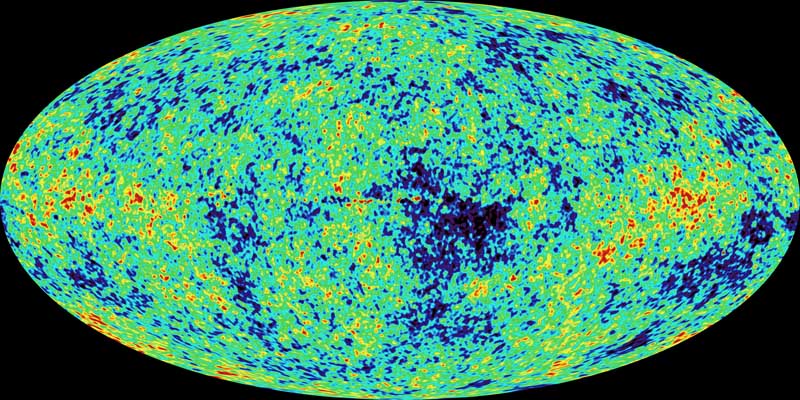
Science and the scientific pursuit of knowledge is riddled with great events like this one, events where instruments are created and used to try and record a specific thing, but instead wind up discovering something heretofore unknown, and definitely unexplained. This is what happened to the scientists from a team led by Alan Kogut of NASA's Goddard Space Flight Center in Greenbelt, Maryland.
In July 2006, the team launched a hypersensitive instrument via a large balloon, named ARCADE (Absolute Radiometer for Cosmology, Astrophysics, and Diffuse Emission) which climbed to over 120,000 feet, where the atmosphere thins out into the vacuum of empty space. The sensors aboard were enclosed in 500 gallons of ultra-cold liquid helium, to bring the instrument's temperature down to the same level as the Cosmic Background, (since accurately measured at 2.7 degrees above absolute zero). They were attempting to study the heat given off by the very first stars in the Universe (which were likely ultra-huge and ultra-hot and ultra-short-lived), using the cold to negate any interference from the Cosmic Microwave Background. They did not get their data though, and this is what blew their minds.
"The universe really threw us a curve," Kogut says. "Instead of the faint signal we hoped to find, here was this booming noise six times louder than anyone had predicted." Detailed analysis ruled out an origin from primordial stars or from known radio sources, including gas in the outermost halo of our own galaxy. The source of this cosmic radio background remains a mystery.So not only is there a Cosmic Microwave Background, there appears to be a Cosmic Radio Background! ARCADE is the first human instrument capable of detecting these radio signals. The source of this noise is unknown, and it remains unexplained. The beauty of humanity's search for truth is that whenever a question gets answered, two new questions are created. We will never run out of natural surprises. The only thing that can stop us is ourselves, and our complacency in the face of the unknown.
Many objects in the universe emit radio waves. In 1931, American physicist Karl Jansky first detected radio static from our own Milky Way galaxy. Similar emission from other galaxies creates a background hiss of radio noise.
The problem, notes team member Dale Fixsen of the University of Maryland at College Park, is that there don't appear to be enough radio galaxies to account for the signal ARCADE detected. "You'd have to pack them into the universe like sardines," he says. "There wouldn't be any space left between one galaxy and the next."
Jan 5, 2009
-FUPPETS- Celebrates 5 year Anniversary of the Mars Exploration Rover Mission!

Our history of efforts with Martian spaceships is fraught with failure. Many of our spacecraft either are lost in flight, or have crashed into the Red Planet. Many of the missions that have survived the perils of intra-solar-system travel have been short lived. That is not the case any longer.
In what may very well be the single most successful and fruitful unmanned mission in the history of humanity, the two Mars Exploration Rovers, Spirit and Opportunity, are still kicking and rolling around the surface of mars, after FIVE YEARS! They have survived the harsh Martian winter 5 times, due to excellent engineering, painstaking construction, and inventive operations by the crews in charge of actually driving and programming the Rovers.
This is an amazing achievement, and one which is not being given enough praise in the regular news media, other than as a curiosity. -FUPPETS- is fucking amped up about this shit, you can be sure.
There have been mechanical issues, and one of the rovers is operating with just 4 of it's original 6 wheels, but the biggest issue the rovers have faced is one of dust. The Martian dust is very fine and covers the solar energy panels with a fine layer which obstructs the solar energy the rovers are dependent on. Below is an image of Spirit on it's one-year anniversary. You can see the layer of dust on it's solar panels.

On the Moon, this would be fatal, but on Mars, which does have a tenuous atmosphere, occasional wind storms actually serve to clean off this dust! This was a purely lucky occurrence which the NASA scientists were overjoyed at experiencing. Without these random dust storms the rovers would have died a long time ago. At one point, Spirit was operating at less than 60% of the energy it normally needed, when, in a completely unexpected surprise, the power capabilities jumped to over 93%! Once the scientists had gotten over their joy they realized that a "dust devil" had miraculously swept across the Spirit Rover, and cleaned off much of the Martian dirt from the solar panels. Incredible. This has happened repeatedly for both Rovers and is the main reason they are still going today. Below is an image of Spirit, 6 months after the above image, with it's solar panels clean.

Here is a Martian "dust devil" photographed by Spirit.

Human ingenuity and skill and intelligence fucking rules all. Here's hoping the Mars Rovers continue in their mission. When you look to the sky at night, take the time to ponder about these extensions of our humanity that are out in the bitter cold of a foreign planet, doing the dirty work that humans need done so as to allow our species to spread and prosper throughout the Solar System, as we need to do, for we are explorers first and foremost.
Nov 25, 2008
Spotting Space Junk from Earth

Here is an image captured as the backpack-sized bag floated away.

After sunset on Nov. 22, Edward Light, using 10 x 50 binoculars, spotted the bag in space while he scanned the sky from his backyard in Lakewood, N.J., Spaceweather.com reported. On the same night, Keven Fetter of Brockville, Ontario, video-recorded the bag as it passed by the star Eta Pisces in the constellation Pisces.
More bag-viewing opportunities are expected.
The tool bag can be seen through binoculars, a few minutes ahead of the space station's orbit. The satellite tracker predicts that the bag will be visible through binoculars from Europe and western North America during a series of passes this week. By late next week, the tool bag should appear in the evening skies over most of North America.
Like other space debris, the tool bag's show will have a fiery end. "We currently predict that the errant tool bag will fall back to Earth in June of next year," said Nicholas Johnson, chief scientist for orbital debris at NASA's Johnson Space Center in Houston. "The date is dependent upon solar activity, so an earlier or later date is possible. As the reentry date draws nearer, a more accurate prediction can be made." And he expects the entire tool bag will burn up upon reentry. "Although we have not yet conducted a detailed reentry survivability analysis for the tool bag and its contents, it is highly likely that no components will reach the surface of the Earth," Johnson told SPACE.com.
Nov 14, 2008
Outer Space Piss Drinkin' Is All The Rage
The International Space Station (ISS) will have new additions after tonight's night-time launch of the Space Shuttle Endeavour. The crew aboard the ISS will grow and will be getting two small bedrooms, the station's first refrigerator, new exercise gear, and perhaps most important for a growing crew -- a second toilet.
On top of all this great stuff, the astronauts will be installing a water purifier, which will filter their urine for drinking.
On top of all this great stuff, the astronauts will be installing a water purifier, which will filter their urine for drinking.
"Other than a faint taste of iodine, it is just as refreshing as any other kind of water."--Bob Bagdigian (NASA)The goal is to process the urine and the moisture in the air at around 92% efficiency. They expect this to equal about 23 liters (6 gallons) of drinking water every day. Since the Space Shuttle is due to be retired, the folks at NASA had to think of something because ferrying tanks of potable water up to the orbiting ISS is just too costly and prohibitive. The ISS crew complement will now be 6, and for that new sleeping areas and another bathroom seem absolutely necessary!
Oct 8, 2008
NASA's Phoenix Mars Lander is Nearing It's End
from Space.com
Due to Mars' inclination, the northern and southern poles are either facing full time sunlight or facing away from the sun with constant darkness and bitter cold.
The Lander was provided with what scientists call a "Lazarus Mode," a re-boot program that may start the Lander and try to communicate with earth when, and if, the solar array manages to get new sunlight energy in a few months.
That would be fucking cool as shit if it were to successfully "hibernate" and then begin to send back data again after the Mars winter. -FUPPETS- wishes the Phoenix Mars Lander all the luck in the Solar System.

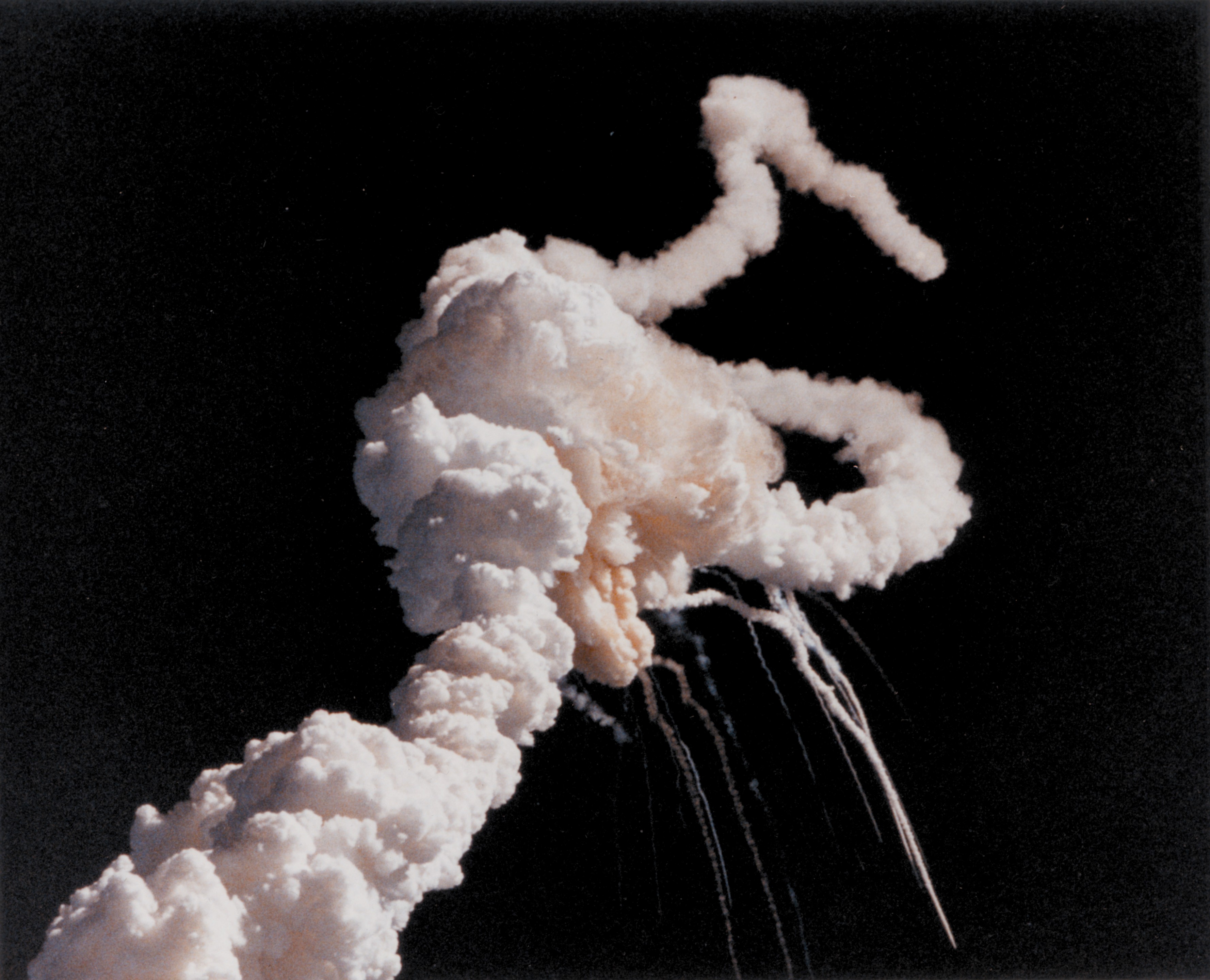


After years and years of failed missions to Mars, and of catastrophic errors, it is sad to see one of the most successful robotic missions ever attempted by NASA come to a close. The Mars Landers have sent back invaluable information and images, and have far exceeded their original 3 month timetables. The Phoenix Mars Lander is in the northern "arctic" region of Mars and is rapidly losing power. It receives most of it's energy from solar cells and the long dark winter on Mars is about to begin.After more than four months on the arctic plains of the red planet, NASA's
Phoenix Mars Lander's days are finally numbered.As the sun begins to set for the
frigid Martian winter, the spacecraft will lose its energy supply, freeze and
eventually fall into a mechanical coma from which it will likely never wake
up.
Due to Mars' inclination, the northern and southern poles are either facing full time sunlight or facing away from the sun with constant darkness and bitter cold.
The Lander was provided with what scientists call a "Lazarus Mode," a re-boot program that may start the Lander and try to communicate with earth when, and if, the solar array manages to get new sunlight energy in a few months.
That would be fucking cool as shit if it were to successfully "hibernate" and then begin to send back data again after the Mars winter. -FUPPETS- wishes the Phoenix Mars Lander all the luck in the Solar System.
Subscribe to:
Posts (Atom)