
Showing posts with label Microorganisms. Show all posts

Apr 7, 2010

-FUPPETS- For Readers XXXVI - Science Compendium

-FUPPETS- likes to aim your mind's-eye squarely in the direction of interesting scientific discovery. With the world's supply of top-shelf researchers at such a high number, it is surely a steady stream of new science being discussed on a daily basis. Remember, for every question answered, at least ten questions appear. This is the way of the Multiverse. With this in mind, here are some of the latest scientific endeavours that -FUPPETS- is keeping an eye on.


Scientists have discovered the first animals that live without oxygen. Deep under the Mediterranean Sea, small animals have been discovered that live their entire lives without oxygen and surrounded by 'poisonous' sulphides. The above image is of one such multi-cellular organism, the only one found so far that exists without mitochondria which uses oxygen to process energy sources. ( Science Daily )


*****


Scientists create world's smallest micro-laser. (Click the image above for a larger version.) "It's 30 micrometers long -- that's 30 millionths of a meter -- eight micrometers high and has a wavelength of 200 micrometers. This makes the laser considerably smaller than the wavelength of the light it emits -- a scientific first. After all, lasers normally can't be smaller than their wavelength, the reason being that in conventional lasers light waves cause an optic resonator to oscillate -- much like acoustic waves do to the soundbox of a guitar. In doing so, the light waves basically "travel" back and forth between two mirrors. The principle only works if the mirrors are larger than the wavelength of the laser. Consequently, normal lasers are limited in terms of their size. Other researchers have endeavored to push the boundaries; "But by developing a completely new laser concept we were able to go quite a way below the limit," says Christoph Walther." - ( Science Daily )


*****


SLIDESHOW: A Cretaceous Menagerie Preserved in Amber. Man, this is some cool shit. As mentioned previously on -FUPPETS- , an amazing amber deposit has been found in Ethiopia which contains animals, plants, fungi, and insects from the Cretaceous period. The link above will take you to a slide show of some of the amazing finds trapped in amber tens of millions of years old. - ( Science Now )


*****


Cold Atoms and Nano-Tubes Come Together in Atomic "Black Hole". The image above is an artist's representation of a newly discovered phenomenon. "Physicists at Harvard University have found that a high-voltage nanotube can cause cold atoms to spiral inward under dramatic acceleration before disintegrating violently. Their experiments, the first to demonstrate something akin to a black hole at atomic scale, are described in the current issue of the journal Physical Review Letters. "On a scale of nanometers, we create an inexorable and destructive pull similar to what black holes exert on matter at cosmic scales," says Lene Vestergaard Hau, Mallinckrodt Professor of Physics and of Applied Physics at Harvard. "As importantly for scientists, this is the first merging of cold-atom and nanoscale science, and it opens the door to a new generation of cold atom experiments and nanoscale devices." - ( Science Daily )

Mar 5, 2010

Single-Cell Organisms Rock -FUPPETS-

The world of microorganisms is so vast and so diverse, that people are still trying to come to grips with the variety. There are billions, if not trillions, more microorganisms in the world around us than there are the larger multi-cellular lifeforms we all see every day. Most microorganisms are single-celled creatures.
Of these, there are two varieties. Prokaryotes are single-celled organisms that lack a cell nucleus, or any other membrane-bound organelles (the tiny "organs" of a cell). In essence, prokaryotes have all their constituent parts floating around inside their one cell. Imagine an amoeba, for instance.
Eukaryotes are organisms whose cells contain complex structures encased in membranes, such as the cell nucleus. Almost all larger plants, fungi, and animals are eukaryotes. It is assumed that the first living things on Earth were prokaryotes, which eventually evolved into Eukaryotes.
Recently, scientists have sequenced the DNA of a very unusual single-celled organism. It's name is Naegleria Gruberi, and it is a common soil-dwelling amoeba, with a very interesting capability.

"[When] under stress, [It] quickly grows two flagella, like sperm tails, that it uses to swim around. It has a third identity, a hard cyst, that can persist in the soil until conditions become damp and warm enough for it to turn into an amoeba.
"This one-celled organism hunts and eats bacteria as an amoeba, swims around looking for a better environment as a flagellate, and then hunkers down and waits for good times as a cyst," Prochnik said. "It is a very rare process to go from amoeba to flagellate like this." - ( Science Daily )

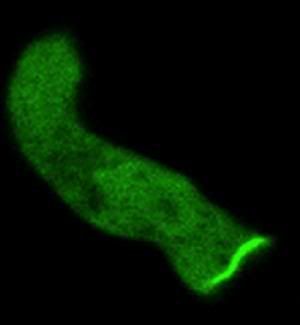
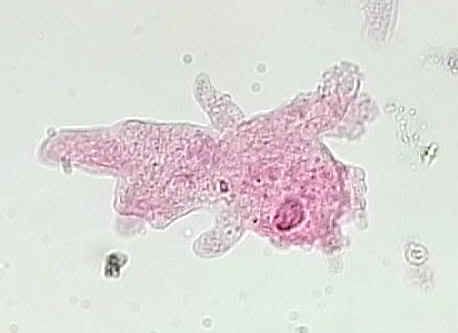
The image on top is of this amazing amoeba in it's flagellant stage, while the bottom image is of the amoeba in it's normal state. the top image has been colored to designate the different areas (micro tubules are highlighted in green, basal bodies in red, and DNA is stained blue).


It is amazing to see how this amoeba switches from a Eukaryotic state of being to a Prokaryotic state, and back again. This could help shed light on how most of the life we see everyday developed from early single-celled, eukaryotic life, into the multi-cellular, compartmentalized prokaryotic life that abounds today. Cool stuff.

Mar 18, 2009

Life Overruns the Earth

(*UPDATED)
There is so much life on the planet Earth that it is nearly impossible to find an area which does not contain some form of living organism. From the deepest, sun-less caves to the coldest deep-freeze on the planet, organisms and microorganisms abound! Life will spread to any and all available ecosystems, no matter how harsh or seemingly inhospitable.
Now, you may think that humans have exhausted the places we can look for such life, but we have definitely not.


Indian scientists have discovered three new species of bacteria in Earth's upper stratosphere that are resistant to ultraviolet radiation, researchers said. - ( Harmeet Shah Singh - CNN )

Is that a mind-fuck or what? A brand-new (to science) bacteria, a whole new species, never-before seen or studied by man, found by sending. . .


. . . a balloon into the stratosphere, the Indian Space Research Organization (ISRO) said in a statement Monday. That layer of the Earth receives heavy doses of ultraviolet radiation, enough to kill most organisms. In their analyses of the retrieved samples, microbiologists detected 12 bacterial and six fungal colonies.
Of them, three bacterial colonies were new species, the ISRO said.
One of the new species has been named as Janibacter hoylei, after the distinguished astrophysicist Fred Hoyle, the second as Bacillus isronensis recognising the contribution of ISRO in the balloon experiments which led to its discovery and the third as Bacillus aryabhata after India’s celebrated ancient astronomer Aryabhata and also the first satellite of ISRO.
"While the present study does not conclusively establish the extraterrestrial origin of microorganisms, it does provide positive encouragement to continue the work in our quest to explore the origin of life," the ISRO said.

This is amazing. an entire bacterial ecosystem, hovering in the upper reaches of our atmosphere, living and dying without ever so much as touching the surface of our planet Earth. Our planet is infected with LIFE! Below is an image of the research balloon used.


The experiment was conducted using a 26.7 million cubic feet balloon carrying a 459 kg scientific payload soaked in 38 kg of liquid neon, which was flown from the National Balloon Facility in Hyderabad, operated by the Tata Institute of Fundamental Research (TIFR). The payload consisted of a cryosampler containing sixteen evacuated and sterilised stainless steel probes.
Throughout the flight, the probes remained immersed in liquid Neon to create a cryopump effect. These cylinders, after collecting air samples from different heights ranging from 20 km to 41 km, were parachuted down and safely retrieved. These samples were analysed by scientists at the Center for Cellular and Molecular Biology, Hyderabad as well as the National Center for Cell Science (NCCS), Pune for independent examination, ensuring that both laboratories followed similar protocols to achieve homogeneity of procedure and interpretation. ( Science Daily )

While people postulate that life must be plentiful and widespread throughout the galaxy and Multi-verse, one must remember that it is also just as likely that our planet is the only place in the cosmos that breeds life. Until we find evidence otherwise, this is a proper assumption, and should make humanity think twice before continuing on our self-destructive ways.

Nov 24, 2008

Giant Deep-Sea Single-Celled Organisms!

Everyone knows about single-celled organisms such as amoeba, protozoa, and the like. To humans these creatures are usually microscopic. Composed of a single cell, these organisms are the most abundant life-form on earth and can be found in nearly every single conceivable niche on the planet Earth. They were around for BILLIONS of years, all alone with the algae and the lichens before multi-cellular organisms rose up out of the muck.
Protists, as single-celled organisms are called, come in three varieties, Protozoa (animal-like protists who have some form of locomotion, usually flagella, pseudopod, or cilia), Algae (plant-like protists with the ability to photosynthesize), and various strange protists that are fungus-like, in that they produce "spores."
On the ocean floor near the Bahamas, biologist Mikhail "Misha" Matz from The University of Texas at Austin and his colleagues have discovered a GRAPE-sized protist and the tracks this round single-celled organism makes on the sea floor! Here is the image of the organism making it's way towards some cup corals.


The creature, named Gromia sphaerica, is the first ever single-celled organism found to leave tracks/traces like a bi-lateral, multi-cellular organism. The scientists will go back to analyze this creature and to figure out exactly how it makes it's way across the ocean floor. Amazing stuff. There is so much we still do not know about life on earth and it is amazing that something so small by our standards and so freaking huge by single-celled organism standards can blow science minds in such a manner.
"We used to think that it takes bilateral symmetry to move in one direction across the seafloor and thereby leave a track," explains Matz. "You have to have a belly and a backside and a front and back end. Now, we show that protists can leave traces of comparable complexity and with a very similar profile." (ScienceDaily.com)

Oct 27, 2008

Chemical Navigation (Or, How To Get Around With No Senses)

-FUPPETS- will soon begin navigating through the blogosphere using purely chemical means, instead of any of the "human" senses. The lesson will be learned from some of the smallest creatures on the planet. Amoeba are shapeless single-celled organisms, who , without ears, eyes, nerves, or brains, nevertheless manage to travel, track, and hunt prey in their own microscopic world through smell.
There are different species of amoeba, just as with all creatures, and the one called Dictyostelium uses what scientists are calling a "chemical compass" to hunt it's prey. Amoeba's hunt bacteria following the strongest source of bacterial chemicals.

Here is an artificially lit Amoeba, with it's chemical motor/compass running, and pulling it towards it's food source in a straight line.


Without the chemical switch turned on, an amoeba extends multiple pseudopodia in all directions, seemingly at random.


Scientists have known what is used to run this chemical compass but have just now figured out what specific protein gene triggers it all. Oddly enough, it is a very similar gene in other "higher" life-forms that is used by the immune system's cells to hunt and track down viral and bacterial invaders. The infinitely complex web of life shows another strand. Scientists think that this chemical switch may "be a key navigational control for many types of cells." (Science Daily)

It is just awe-inspiring to see how many processes in living things run on a purely chemical basis. Science keeps finding micro-organisms that subsist and even thrive without any of the "normal" life giving energy sources, such as plants, sunlight, oxygen, etc. More creatures live off of chemical energy than was ever thought possible. Remember, when people tell you chemicals are bad for you (and the morons do so regularly), to reply "Water is a chemical you know." Let -FUPPETS- be your guide.

Oct 2, 2008

-FUPPETS- Links

-FUPPETS- loves outer space. That is a given. -FUPPETS- also thinks that for the human race to have any sort of future beyond nations hoarding what resources are left and sparking endless wars to fight over these resources, it needs to think about proper space exploration. The human spirit is one of discovery. The human will is always seeking new pastures, new endeavors, new challenges. It is what keeps us from complacency, and pushes our sphere of knowledge ever wider.

Astrophysicist Stephen Hawking gave a speech at George Washington University, to mark the 50th Anniversary this year of the U.S. space agency NASA. In it he discusses his views on what the future must hold, as it relates to the human expansion out of our planet Earth.
Here is an edited extract of this speech. Very cool stuff.

-FUPPETS-

Petroleum is one of the most amazing substances on Earth. A by product of millions of years of pressure and heat on the organic leftovers from billions of plants and organisms at the bottom of ancient Earth oceans, petroleum is so useful that it is impossible to imagine the modern world without it, whether it is fuels, plastics, foams, or the thousands upon thousands of secondary chemicals and applications for these chemicals. Scientists have found that, half a mile deep under the ocean floor, micro-organisms are feeding on the petroleum, and leaving behind natural gas as their by-product. Here is the link to a Science Daily article about these creatures and the scientists who discovered them.
-FUPPETS-

Sep 10, 2008

WATER BEARS - Nature's Toughest Animal?

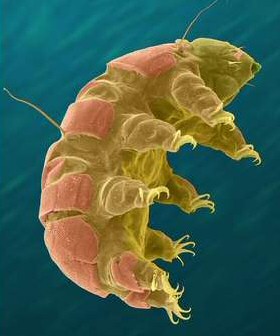
This is a "water bear", or Tardigrade.

Tardigrades are tiny segmented creatures with eight legs. There are over 1000 species of these tardigrades and the biggest one is just around one and a half millimeters in size. The smaller ones are less than a tenth of a millimeter in size. They are found in nearly every environment on Earth, from deserts to the bottom of the Arctic Ocean. They are most easily found living in lichens of mosses.

It is from these lichen tardigrades that scientists discovered their most intriguing feature. The tardigrades have the capability to survive in the most extreme of environments. Lichens and Mosses are regularly exposed to drying heat and sunlight. When this happens, the "water bear" can dry itself up and cease all living functions, only to spring back to life when rehydrated, even years later. They can survive for up to ten years without water by doing this! It is called "CRYPTOBIOSIS." They can last at near absolute zero temperatures, and up to 303 degrees Fahrenheit. They are also able to take 1000 times more radiation than any other known animal.

It gets even weirder. Tardigrades are "EUTELIC" animals. Eutelic animals are creatures that, upon reaching maturity, all have the exact same number of cells in their bodies. Think about how weird this is. Once they mature, cell division stops, and the creature can only grow by cell enlargement. Most Eutelic animals are microscopic of course. Some of these teeny animals are predatory and hunt other microorganisms.

Now for the kicker. These animals can survive in the cold vacuum of space!

In September 2008, a space launch showed that tardigrades can survive the
extreme environment of
outer space for 10 days.
After being rehydrated back on earth, over 68% of the subjects protected from
high-energy UV radiation survived and many of these produced viable embryos, and a handful survived full exposure to the sun.
The amount of cold and heavy radiation/cosmic rays these animals were exposed to would kill any mammal. Even the few that had direct exposure to the Sun's harmful radiation had survivors, who appeared fully normal upon return to Earth! Incredible!


How to Find Terrestrial Tardigrades

-Collect a clump of moss or lichen (dry or wet) and place in a shallow dish, such as a Petri dish.
-Soak in water (preferably rainwater or distilled water) for 3-24 hours.
-Remove and discard excess water from the dish.
-Shake or squeeze the moss/lichen clumps over another transparent dish to collect trapped water.
-Starting on a low objective lens, examine the water using a stereo microscope.
-Use a micropipette to transfer tardigrades to a slide, which can be observed with a higher power under a compound microscope. (from Microbial Life website)